How to Sit With an Unanswered Question and Still Feel Grounded
Most people would rather pretend they know something than admit they don’t. They think not knowing says something about their abilities. It doesn’t.
What it says is that you are human, and people operate daily inside an ocean of things they have never learned, never encountered, and never needed to care about. That is not a flaw in the design. That is the design.
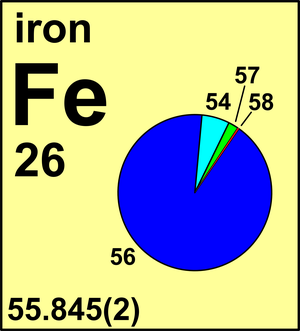
Here is a simple example. What is the atomic weight of iron? What, you don’t know? Most people have no idea. I damn sure didn’t until I looked it up. And most people have never lost a moment of sleep over it. Nobody has ever sat in a dark room at midnight feeling ashamed that iron’s atomic weight escaped them. It simply wasn’t relevant. The ignorance was harmless, so the ignorance got ignored.
Ignorance is not stupidity. That distinction matters more than most people realize. Ignorance is the absence of specific information. It is neutral. It is correctable if the information turns out to matter. Stupidity is something else entirely. Stupidity is a choice, the active decision to stay comfortable rather than engage honestly with what is in front of you. One is a condition every living person shares. The other is a posture. You can do something about ignorance. Choosing stupidity is harder to walk back.
So why does not knowing certain things feel so different from not knowing the atomic weight of iron? Because somewhere between childhood and now, the idea took hold that some questions carry a verdict. That if you are still sitting with something unresolved, it reflects poorly on you. That a smarter person, a more capable person, a more together person would have figured it out by now. That idea is doing a lot of quiet damage to a lot of people who deserve better than to carry it.
Here is what that damage actually looks like. It looks like embarrassment in a conversation when someone asks a question you can’t answer. It looks like anger at yourself for not having closed something that may not have been closeable. It looks like avoiding the subject entirely because engaging with it means admitting you don’t have it resolved. None of that is the unanswered question hurting you. That is you hurting yourself over the unanswered question. The question is just sitting there. You are the one making it mean something it doesn’t.
Not every question deserves a chase either. Some answers are genuinely worth pursuing. You don’t know something, it matters, you go find out. That is just basic engagement with the world. But some questions are not worth the time it takes to run them down. The energy required exceeds whatever the answer would actually deliver. Learning to tell the difference is not giving up. It is a judgment call and making it cleanly is its own kind of intelligence.
The past is the clearest version of this. Whatever happened, happened. You cannot reach back and alter it. What you can do is learn from it, carry it differently, understand it better over time. But the need to have a clean and final answer for why something occurred, to close the loop completely, to make the story make sense in a way that satisfies you fully, that need will hollow you out if you feed it long enough. Some things do not come with explanations attached. That is not a punishment. It is just the honest shape of certain experiences.
There is a specific kind of relief available to people who learn to say I don’t know without flinching. Not the relief of having found the answer. Something quieter than that. The relief of no longer spending energy pretending. Of not having to maintain a version of yourself that has everything accounted for. That performance is exhausting, and most people don’t realize how much it costs them until they stop doing it.
You are allowed to not know. You are allowed to sit inside an open question without treating it as evidence of your failure. The question mark at the end of something does not erase everything you do know. It does not diminish your ability to function, to think clearly, to live well. It is just a question mark. It was always just a question mark.
What you do with the space around it is entirely up to you.
By the way, the atomic weight of iron is 55.845(2).
Leave a Reply