A Pattern That Shouldn’t Be Ignored
If you spend enough time around the strange, you stop expecting clean patterns. Most of what matters doesn’t arrive that way. It shows up scattered, incomplete, easy to dismiss if you look at each piece in isolation. Only later, sometimes too late, does it start to look like something that deserved more attention from the beginning.
We are watching one of those patterns form right now.
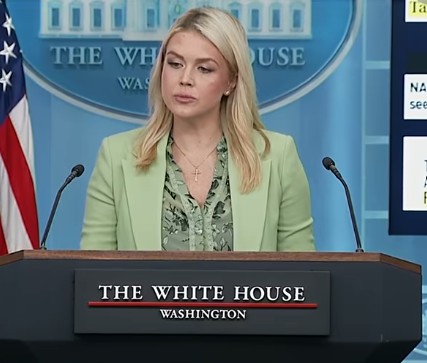
The White House has acknowledged reports that a group of American scientists with access to sensitive nuclear and aerospace research have either gone missing or died since mid-2024. During an April 15 briefing, Press Secretary Karoline Leavitt said she had not yet spoken with the relevant agencies but would follow up. If the reports are accurate, she said, it would be something worth looking into. That response is measured, careful, and incomplete in a way that leaves more questions open than it answers.
These aren’t just cases on paper. These are real people.
William Neil McCasland, a retired Air Force major general connected to advanced research circles, has been missing since February 27, 2026. Monica Reza, an engineer at NASA’s Jet Propulsion Laboratory, disappeared in June 2025. Nuno Loureiro, a plasma physicist working in high-level energy research, was shot and killed in December 2025. Carl Grillmair, an astrophysicist at Caltech, died in February 2026 under circumstances that haven’t been adequately explained.
Those are only the names that surface first.
Others sit just outside the main coverage, easier to overlook but still part of the same growing cluster. Melissa Casias vanished in New Mexico, leaving personal belongings behind in a way that doesn’t resolve cleanly. Anthony Chavez disappeared without taking basic essentials. Jason Thomas went missing and was later found dead, with no clear public accounting of what happened. Frank Maiwald’s death was attributed to natural causes, but like several others in this group, the details available to the public are thin. Names like Steven Garcia and Michael David Hicks appear depending on where the timeline begins, stretching the pattern further back and making it harder to define where it actually starts.
That lack of a clean boundary should concern us.
In practice, it seems to have the opposite effect, encouraging people to either dismiss the whole cluster as too loosely defined to take seriously, or to expand it outward without limit. Neither response is adequate.
There is no official list. No confirmed link. No statement that draws a clear line between these cases and says this is one thing. That absence has become a justification for treating each case as isolated, even when they occupy the same narrow band of sensitive work and security access. That justification is getting harder to accept.
It may be coincidence. But the concentration of cases, the professional overlap, and the timeline make coincidence an increasingly uncomfortable explanation.
Former FBI assistant director Chris Swecker has pointed to the most grounded explanation available: modern espionage. Quiet, targeted, and rarely visible in ways that satisfy public scrutiny. That explanation fits within what we already know exists in the world. It doesn’t resolve the pattern.
But it raises a problem that isn’t being addressed with any urgency.
If this is espionage, it has been effective enough to remove or disrupt individuals connected to highly sensitive national security work without triggering a clear, coordinated public response. If it isn’t, then we are watching a cluster of disappearances and deaths concentrated in one of the most critical sectors in the country, with no compelling explanation and no apparent pressure to produce one.
Either conclusion should alarm people more than it appears to.
This isn’t about evidence of anything beyond the ordinary. There isn’t any, and claiming otherwise would be irresponsible. But for those who pay attention to how unresolved situations develop, this is exactly how they begin. Not with a dramatic revelation, but with a series of events that don’t quite justify alarm individually, yet feel deeply wrong when placed side by side. That feeling tends to get dismissed. And in the space that dismissal creates, something else moves in.
Online, the narrative is already expanding past espionage. It reaches toward hidden programs, suppressed research, and things that exist just outside public disclosure. None of that is supported by evidence. But ignoring the underlying issue doesn’t slow that expansion. It accelerates it. When something sits unresolved and under-examined, people don’t leave it alone. They build around it, and what they build rarely stays close to the facts.
That’s why this matters, and not in an abstract sense.
The pattern, even if incomplete, sits in a space that should be drawing sustained institutional attention. It isn’t. The story surfaces, circulates briefly, and then loses ground to whatever dominates the current news cycle. There is no consistent pressure for answers. No clear demand for transparency. It drifts, and as it drifts, the window for a grounded public accounting gets smaller.
Maybe this is a series of unrelated events that only appear connected because of how they’ve been grouped. That remains possible.
But if it isn’t, this is exactly how something significant gets missed. Not because it was concealed with any sophistication. Because it wasn’t taken seriously while it was still forming. And by the time it is, the moment for a clear answer may already be gone.
That’s the part worth paying attention to now, while there’s still time to.
Leave a Reply