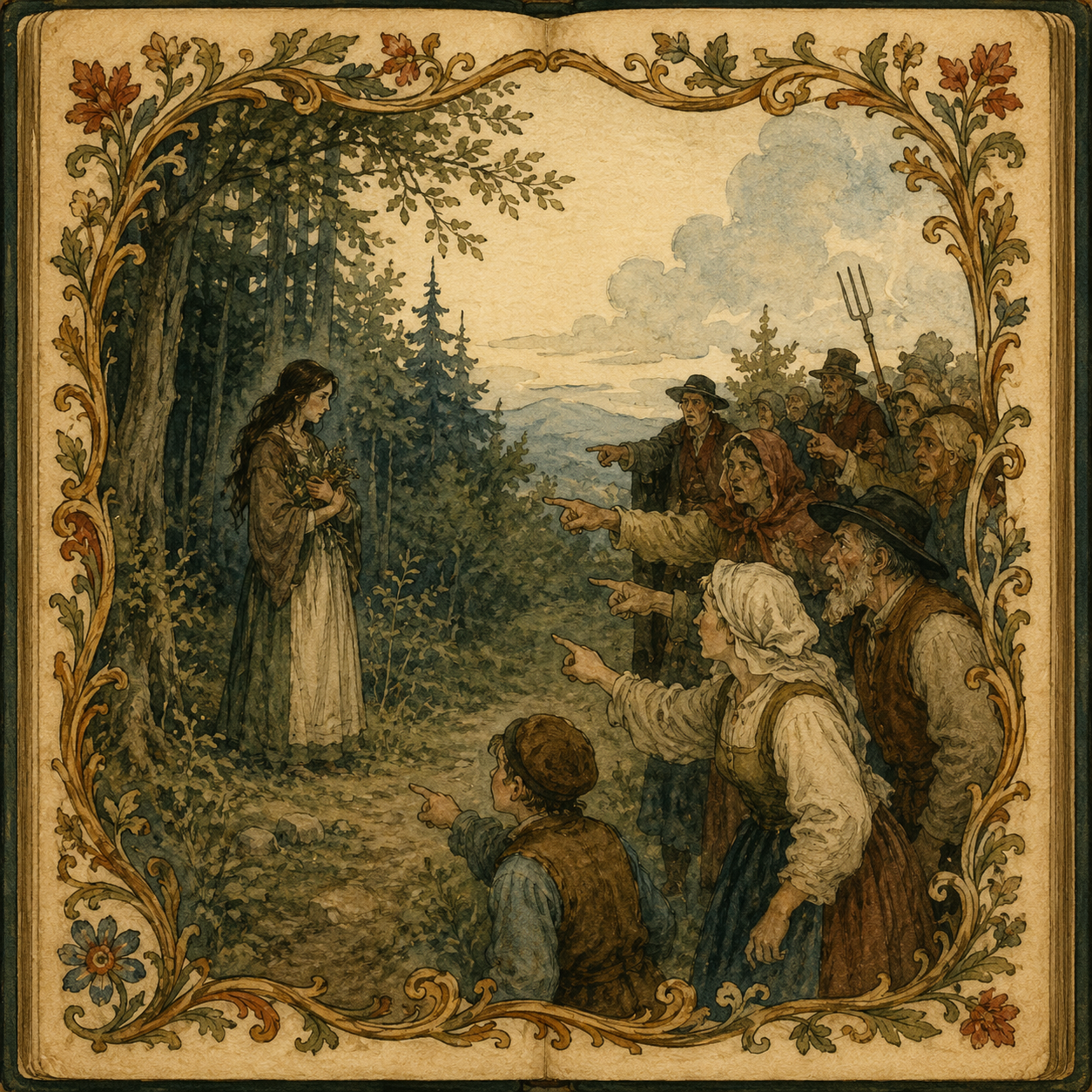
Folklore didn’t survive because it was true. It survived because it was useful
It doesn’t matter who you are or where you are in life. You already know what it feels like to have a story told about you that was never true. Maybe it followed you anyway. Maybe people believed it because it was useful to them, not because it had anything to do with who you actually were. That is a specific kind of damage that tends to last.
That is exactly what happened to witches.
For centuries, the story was the same. To practice witchcraft, you had to make a deal with the Devil. This wasn’t just a metaphor or a symbol. It was the Devil himself, waiting at a crossroads or in a forest clearing, contract ready. You signed in blood to receive your powers. You paid the debt with your soul. That story moved through courtrooms and pulpits and cheaply printed pamphlets across Europe while people were literally burned alive. Judges cited it as evidence. Neighbors repeated it as fact. Even family members used it against their own family.
It was not a description of what witches were doing. It was a description of what certain people needed witches to be doing.
The difference between those two things is everything.
Witchcraft has its own history. Its own internal logic. Its own relationship to the natural world, to knowledge, to practice. That relationship is old and layered and has nothing to do with devil worship. The pact was never part of it. Someone added the pact later, and they added it deliberately, and it is worth asking why.
The answer is not complicated. It is just uncomfortable.
The pact narrative gave the Church a mechanism for prosecution. It converted herbal knowledge, folk healing, midwives, and other practices that existed outside sanctioned boundaries into something that could get you killed. It gave civil authorities a serious enough charge to justify execution. It gave frightened communities a story that explained misfortunes. Things like a sick child, a failed harvest, a neighbor’s sudden death. It took women who understood the land, who knew which plants healed and which ones harmed, and it made them agents of evil. That did not happen by accident. There were people who needed it to happen.
This is the question most conversations about folklore never get around to asking. Not whether the story was true. Whether it was working, and for whom.
Two camps tend to get this wrong, and they fail in the same direction without realizing it. Skeptics dismiss folklore as primitive thinking, the kind of thing educated people have moved past. Academics often bury it under so much theoretical scaffolding that the actual human beings who lived inside these traditions disappear entirely. Both are busy evaluating the story. Neither is asking what the story was doing in the world, and to whom it was being done.
Believers face a different problem. When folklore gets treated as literal hidden truth, the form tends to survive while the function gets lost. People carry the shape of a tradition forward without understanding what it was built to do. That means they cannot see when that same shape is being used against them again.
The pact legend has not died. It still surfaces in certain religious communities. It appears in the language of people who have their own reasons for keeping others afraid of what they do not understand. Things like Harry Potter books and movies, certain types of music, or worse for loving someone. The machinery is the same as it was six hundred years ago. The story is not about witches. It never was. It is about who gets to define what is dangerous, and what happens to people who fall outside that definition.
Folklore that survives this long tends to have patrons. They are not always visible ones. Stories rarely persist for centuries on momentum alone. Someone usually benefits from keeping them alive.
Some folklore kept children away from straying in the woods too far or staying out too long after dark. Some held communities together through grief and loss. Some preserved knowledge that would otherwise have vanished. All of that is real and worth honoring.
But some folklore kept people afraid of the wrong things. On behalf of people who needed them to be afraid. And some of it is still doing exactly that.
The stories worth understanding are the ones where you can still see the machinery running. The ones where the fear is a little too convenient for a little too few people.
You have probably already met a story like that. You may be living inside one right now.
Leave a Reply