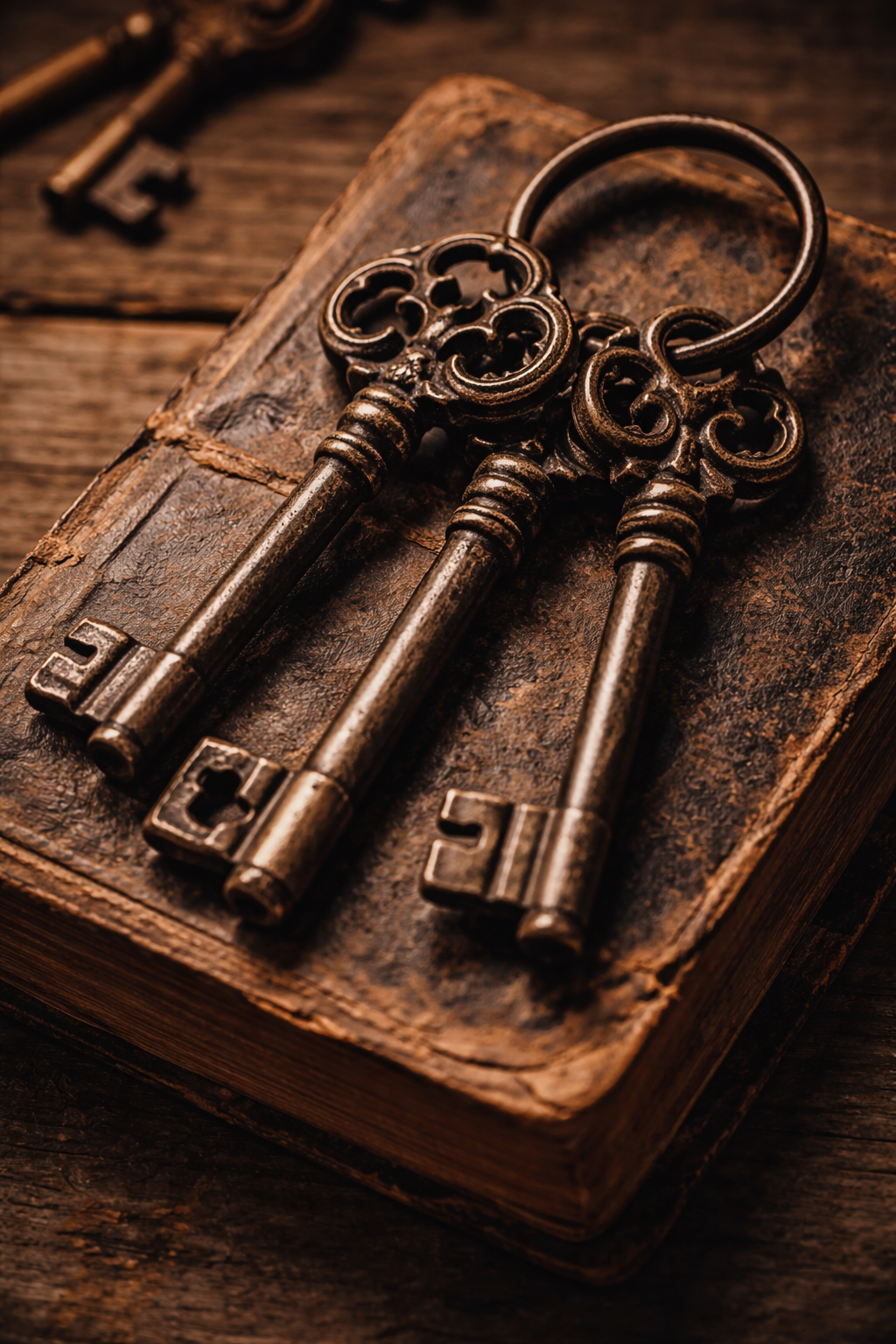
Why is it so scary to lose your keys?
First published on Medium
Keys were never neutral objects. They didn’t exist to help people move through space. They existed to let someone stop that movement and walk away. For most of their history, keys belonged to places people were not meant to leave. Not homes. Not private rooms. Places where confinement was the point.
Cells. Dungeons. Holding rooms. Storage spaces where bodies were counted and stacked the same way supplies were. Iron gates closed because a person closed them and took the key with them. Anyone could shut a door. What mattered was who kept the key afterward and how long they stayed gone.
Time is what keys controlled.
Hunger did not end because someone asked. Cold did not ease because someone waited. Shackles stayed tight because the person who could loosen them was somewhere else, sleeping, eating, or forgetting. The lock did its work quietly. No conversation. No negotiation. The person on the other side did not need to be watched. The key made sure of that.
This is why keys were carried by jailers, guards, overseers, and wardens. Not because they were useful tools, but because they allowed distance. A man could restrain another man and then remove himself from the suffering. He did not have to stay. The key meant he didn’t have to listen.
Shackles made that power physical.
Iron cuffs around wrists and ankles. Collars locked around necks. Chains run through multiple bodies so no one could move without dragging someone else with them. None of it functioned without a key. Shackles did not loosen on their own. They stayed tight because the person who controlled them chose not to return yet.
This wasn’t limited to medieval prisons.
Keys and shackles worked together through slavery, prisons, labor camps, and transport ships well into the modern era. The technology barely changed because it didn’t need to. Iron held. Locks held. Keys decided when restraint ended, if it ended at all. A system built on that kind of control does not require constant violence. It requires access to the key and the willingness to withhold it.
Religion didn’t invent this logic. It recognized it.
Hekate was called the holder of the keys because she presided over passage that depended on permission. Crossroads. Thresholds. Points where movement could happen but did not have to. The key in her keeping didn’t promise entry. It marked authority over whether movement was allowed to continue.
Keys were placed with the dead for the same reason. Not to open anything. To keep something from opening again. A grave was meant to hold. The key marked that decision. Someone stayed behind. Someone else walked away.
That understanding hasn’t disappeared.
Losing a key still triggers a reaction that feels outsized because it is not really about the object. Someone who misplaces their house key does not just shrug and make a copy. They replay where it might have fallen. Who might have picked it up. Whether it had an address attached. Whether someone now has quiet access to the place where they sleep. The fear doesn’t ease until the locks are changed. Until the old key is rendered useless. Until authority is restored.
What they are afraid of is not entry.
They are afraid of not knowing who decides it.
A lost key means someone else might hold the power to enter without asking, to wait until the house is empty, to come back later when it is not. It means the boundary still exists, but the control over it has shifted. That is why the anxiety does not fade until the key no longer works. The metal has to be made irrelevant. Only then does the body relax.
We don’t explain this fear to ourselves. We don’t have to.
We understand it at the level of instinct. The same instinct that made people fear jailers who jingled keys as they walked. The same instinct that made chained bodies watch the hand that held them. The same instinct that made a locked door feel permanent when no footsteps returned.
A door is just a boundary.
The key belongs to the person who decides when that boundary stops holding.
And the unease we feel around keys, even now, is not superstition. It is memory. It is the knowledge that control does not need to be loud to be absolute. Sometimes it just needs to disappear into a pocket and not come back for a while.
Leave a Reply