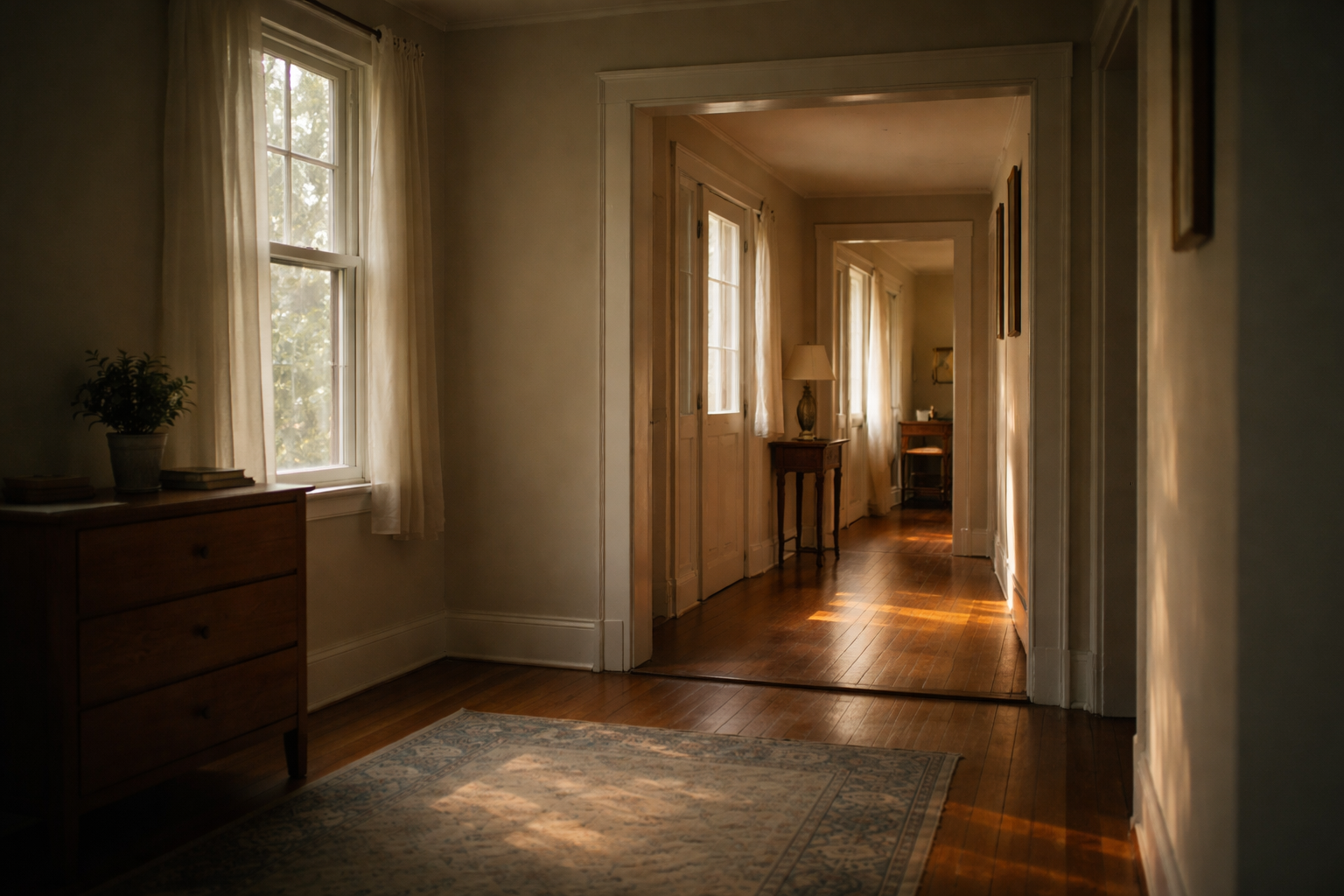
What it means when a place feels like it knows you
First published on Medium
Have you ever been in a house that felt different the moment you stepped inside?
Not bad, exactly. Just… different.
Most people can name at least one place that felt warm and familiar right away, the kind of space where your shoulders drop without thinking about it. And then there are houses that do the opposite. They feel colder than the temperature suggests. The air feels charged, like something hasn’t finished settling yet.
You don’t need to believe in anything strange for that reaction to happen.
People are good at rationalizing such reactions. Drafts. Old wiring. Poor lighting. A house settling into its own sounds. And even after all the practical reasons have been considered, sometimes the feeling still stays. That low-level sense that a place is holding more than just furniture and walls.
Psychologists have long noted how environments shape behavior and emotional response. We associate rooms with routines, moods, and moments, often without realizing it. A kitchen may become tied to tension because of years of arguments. A bedroom carries the weight of grief because it once held someone who never left it again. Over time, those associations stop being memories and start feeling like atmosphere.
When we walk into a house with a long history, we aren’t entering a neutral space. We’re stepping into patterns worn down by repetition. Light falls the same way it always has. Sounds travel along paths they’ve learned. Even the silence has been practiced. Whether we call it memory, residue, or something else entirely, spaces absorb patterns by how they’re used, and sometimes they don’t let it go easily.
Many of us have gone through this without ever giving it a name. You walk into a room and feel your body reacting before your mind can catch up with what’s going on. You change your pace. You lower your voice. You sit or stand in spots that just make sense to you, not knowing the reason behind it all. The space quietly informs you of how to act, and you pay attention, whether you notice it or not.
That raises an uncomfortable question. If houses feel the way they do because of what happened inside them, how much of that feeling belongs to the structure, and how much belongs to us? We carry our own memories into every room we enter. We fill up empty spaces with anticipation. Maybe what we sense isn’t a house remembering us at all but rather recognition on our part of something we’ve felt before-and giving it a home.
Perhaps that is the reason some houses continue to stick with us long after we have left them. Not because they remember in any way that can be measured but because they held us during moments which eventually, at some point, defined who we became. They saw versions of us who no longer exist. If a place is heavy or warm or unsettled, maybe it responds to what once passed through it. Or perhaps it’s simply reflecting something carried by its newest inhabitant, or something carried within us. But still, the question remains. When a house seems to know us- is it because it remembers or because we do?
Leave a Reply