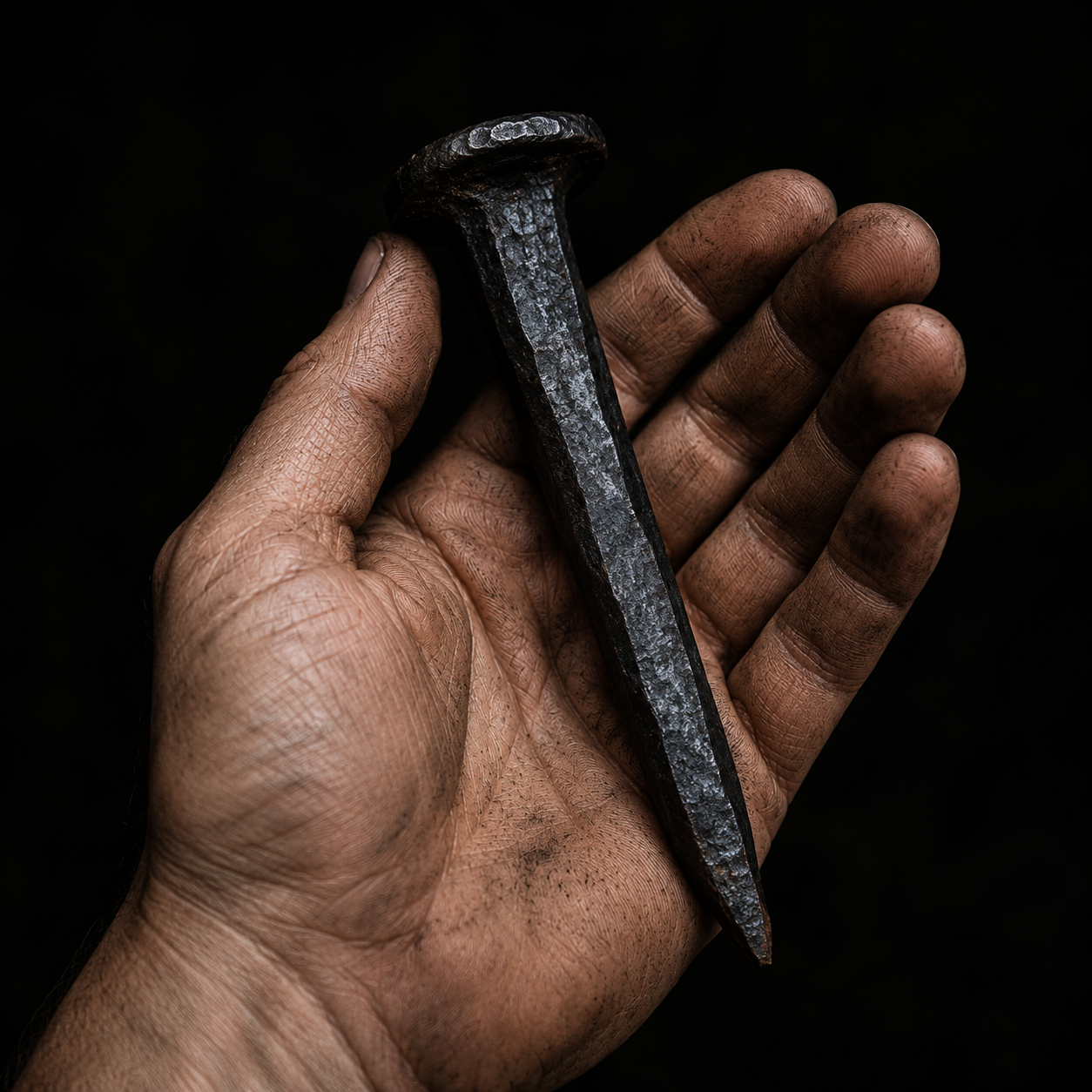
Iron, Fallen Angels, and the Oldest Ward We Know
There are iron stakes driven into the ground at the four corners of my house. I put them there myself and I have a PhD. Celts hung iron above their doors. Bedouins buried it at thresholds. Hindu tradition warns against leaving it out after dark. These cultures never spoke to each other. They had no shared text, no common prophet, no reason to agree. And yet they all arrived at the same material when they were afraid. You’ve probably done something you can’t fully explain. Kept an object like a lucky charm. Avoided something that felt wrong. Called it habit or intuition. Maybe it was. Maybe it wasn’t.
Perhaps the most widespread protective material in human history is iron. It is older than most of what we call civilization. It is perhaps the most widespread protective material in human history, believed across cultures to be hostile to spirits and supernatural beings. That is a remarkable sentence when you slow down enough to feel the weight of it. Not one culture. Not one religion. Not one continent. Humanity, broadly and repeatedly, decided that this specific metal held something back.
The question nobody asks is why.
In Celtic tradition, the belief in cold iron runs deep. Nailing an iron horseshoe above a door was said to repel evil spirits, rooted in the conviction that malevolent supernatural entities are averse to iron’s material nature. That practice spread and shifted over centuries but the core of it never changed. Iron at the threshold. Iron as the line between what belongs inside and what doesn’t. In Germanic and Scandinavian households, the threat was more intimate. The Alp in Germany and the Mara in Scandinavia were night spirits believed to cause sleep paralysis, to sit on a sleeper’s chest and hold them down. The defense was an iron knife or nail placed under the pillow. Not a prayer. Not a symbol drawn on the wall. A piece of metal, cold and physical, tucked beneath the place where a person was most vulnerable.
That detail matters. It isn’t abstract. It is a person in a dark room, afraid of something they cannot see, reaching for iron.
In China, iron scissors and knives were placed near the bed of a pregnant woman or newborn to ward off spirits believed to steal a child’s soul. Iron mirrors were thought to reveal the true form of demons. In Japan, iron tools and weapons were considered capable of severing malevolent spiritual influence. Among the Yoruba people of West Africa, iron is sacred to Ogun, the deity of iron, war, and technology. Iron objects are placed at thresholds and shrines to create a spiritual boundary that evil forces cannot cross. That tradition survived the middle passage and took root in Hoodoo and Conjure practices in the American South, where iron nails, horseshoes, and railroad spikes are buried under doorsteps to fix a protective barrier against spirits and curses. The geography changed. The continent changed. The material stayed the same.
Then there is the blacksmith.
In Scotland and Ireland, blacksmiths were considered blessed individuals whose work with iron protected them from supernatural harm. Not just the iron itself. The person who worked it daily, who understood it in a way most people never would, became semi-sacred. Their proximity to the material was its own form of protection. That is a tradition saying something specific about what iron is, not just what it does.
The pattern at this point is undeniable. The problem is that nobody seems to know where it started.
Here is where it gets strange.
The oldest surviving angelological text we have, the Book of Enoch, addresses the origin of metalworking directly. According to 1 Enoch, the Fallen Angel and Watcher Azazel taught men to make swords, and knives, and shields, and breastplates, and made known to them the metals of the earth and the art of working them. Azazel was not a benevolent teacher. His influence was dual-edged. His teachings on metallurgy and weaponry led to advancements in warfare and strife. The knowledge of working metals introduced the concepts of envy and greed into the human condition. The text treats this transmission not as a gift but as a corruption. The knowledge itself was tainted by its source.
Sit with that for a moment.
The oldest written account we have of where metalworking came from attributes it to a fallen angel. A figure the tradition treats as a source of moral decay. And somewhere between that origin story and the present, humanity took the thing Azazel gave us and started using it to keep his kind out.
That is not a minor irony. That is the whole story.
The Babylonian Talmud adds another layer. The demon king Ashmedai is captured and physically restrained using an iron chain. Not repelled. Not frightened away. Bound. Iron doesn’t just hold something at the threshold in that account. It contains something already present. That distinction, between keeping something out and holding something in, suggests the tradition understood iron as capable of something more than a ward. It was a restraint. A material that could impose limits on things that otherwise had none.
Which brings us back to the question underneath all of this.
Why iron? Of all materials available to human hands across all these centuries and cultures, why does this one keep appearing at the moment of fear? The traditions themselves offer different answers. Some suggest that iron’s magnetic properties create a kind of spiritual barrier. Others maintain that iron’s effectiveness derives from its connection to the earth and natural ores, giving it a grounding energy that spirits, being ethereal and unbound, cannot withstand. None of these explanations fully satisfy. They circle the question without answering it.
Maybe the answer is older than any of them.
If the Book of Enoch is taken seriously as a cultural document, even purely as mythology, it suggests something worth considering. The knowledge of iron came from outside the natural order, from a being the text holds responsible for corruption on a cosmic scale. And perhaps what makes iron effective, in the logic of the traditions that use it, is precisely that origin. It carries the same frequency as what it repels. It came from the same source. It knows what it’s up against.
That is speculation. I want to be clear about that. But it is the kind of speculation that the evidence keeps pointing toward without quite proving.
The stakes in my yard are not decorative. I am not being theatrical. I have spent years studying this material, reading these traditions, sitting with the question of what they might mean. Those studies have never been purely academic. I have learned enough to know that there are things operating in this world that resist clean explanation, and I believe evil is real, not in the way a Sunday sermon describes it, but in the way you feel it when something in a room changes and every instinct you have tells you to pay attention. I crossed the line between studying protection and practicing it deliberately. Eyes wide open.
You don’t need stakes. A small iron charm. A keychain. Something that fits in your pocket or hangs near your door. The tradition never required grand gestures. A nail under a pillow. Scissors near a newborn. Iron at a threshold. The scale was always small. The intention was everything.
Whether it works is a question I cannot answer for you. But I will tell you this. Every culture that ever looked into the dark and reached for something reached for the same thing.
That has to mean something.
Leave a Reply