A new documentary introduces “practice footage,” but it raises more questions than it answers.
New evidence is supposed to bring clarity. That’s the expectation. Something new surfaces, something previously unseen, and the conversation moves closer to resolution. But in fields that have lived too long in uncertainty, new material does not always clarify. Sometimes it does the opposite. It adds another layer that has to be sorted, tested, and questioned before it can be trusted. Until that happens, it is not evidence in the meaningful sense. It is a claim.
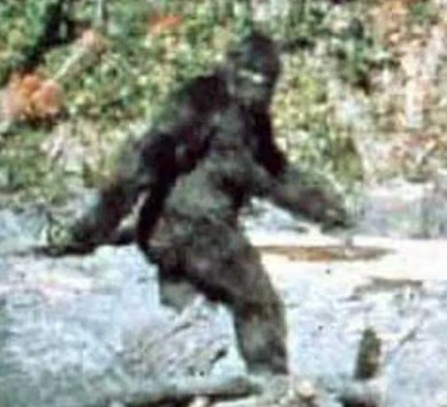
The Patterson–Gimlin film has existed in that tension since 1967. Shot at Bluff Creek in Northern California, it shows a large, upright, hair-covered bipedal figure walking along a creek bed before turning briefly toward the camera. That figure is an alleged Bigfoot, often referred to as “Patty,” and has become one of the most analyzed and debated images in modern anomaly research. The film has never been conclusively proven authentic. It has never been conclusively exposed as a hoax. Decades of study have not resolved it. They have only defined the boundaries of the argument.
Now a new documentary introduces what is being described as “practice footage.” A film clip that appears to show a figure walking in a way meant to resemble the subject of the original film. The implication is clear. If the movement can be reproduced, then the original event may have been staged.
But implication is not evidence.
Before anything else, there is a simpler question that has to be answered.
Where has this footage been?
If a film is being presented as evidence that could reshape how we understand one of the most studied pieces of footage in this field, its history matters as much as its content. Who had it. How it was stored. When it was handled. Whether that chain can be traced without gaps. In any other context, that would be the starting point, not a footnote.
What is being described here is a reel that surfaced decades after the fact, reportedly found in a private collection and only recently developed. That does not automatically make it false. Old material does surface. Archives are rediscovered. But without a continuous and documented chain of custody, the footage exists in a kind of suspended state. It can be viewed. It can be discussed. It cannot yet be treated as established evidence.
That standard is not excessive. It is the same standard the original film has been subjected to for decades. Frame by frame analysis. Biomechanics. Proportion studies. Film grain examination. The Patterson–Gimlin footage has been pulled apart in ways few pieces of film ever have. If something new is going to explain it, it has to meet that level of scrutiny.
So far, this does not.
There is another question that sits just beneath the surface.
If this footage is being presented as a rehearsal, why was it never developed at the time?
Film in that period was not something people casually ignored. It had cost. It had purpose. If someone took the time to stage and record a practice sequence, that implies intention. It implies the footage mattered to whoever created it. And yet, by the current account, it remained undeveloped and unseen for decades.
There are ordinary explanations for that. Material gets misplaced. Collections sit untouched. Context is lost over time. That happens.
But if this was part of a deliberate effort to stage the original film, the lack of immediate use raises a different kind of question. Not about what the footage shows, but about why it was handled in a way that does not match the purpose now being assigned to it.
Even if the question of origin is set aside for a moment, the footage still has to stand on its own.
At a glance, the figure in the practice clip appears similar. Upright. Bi-pedal. Hair-covered. Moving across open ground in a way that invites comparison. That surface resemblance is doing a lot of the work. It is what allows the footage to be framed as an explanation.
But similarity at a glance is not the standard.
The original Patterson–Gimlin subject has been examined in detail for decades. Not just the outline of the figure, but the way it moves. The bend in the knees. The rhythm of the stride. The length of the arms relative to the body. The overall mass and how that mass appears to carry through each step. Whether one accepts those analyses or not, they exist, and they have set a baseline for comparison.
When placed against that baseline, the new footage does not appear to match cleanly.
The gait looks more typical. The legs extend in a way that feels closer to an ordinary human walk than the more flexed movement often noted in the original film. The proportions appear different as well. The arms look shorter relative to the body. The figure itself appears thinner, with less of the bulk that has been discussed for years in relation to the Patterson–Gimlin subject.
None of that proves anything on its own. But it matters.
If this footage is being presented as a rehearsal or precursor, it should align closely with what came after. Not loosely. Not generally. Closely. The more precise the claim, the more precise the match needs to be.
Right now, the resemblance feels broad, not exact.
And if it is not exact, it does not resolve the original film. It introduces a second figure that looks similar enough to invite comparison, but different enough to leave the question open.
This is where the problem shows itself.
A new piece of footage appears after decades and is presented as an explanation. It looks close enough to the original to get attention. Different enough to raise questions. It shows up without a clear history, without the same level of analysis, and without the kind of verification the original film has already gone through.
And yet it is being treated as if it answers something.
It doesn’t.
It adds another question.
The Patterson–Gimlin film is still what it has always been. Studied, argued, and unresolved. That has not changed. What has changed is that now there is another piece of footage attached to it. Another claim. Another layer that has to be sorted out before it can mean anything.
That is how this field becomes harder to evaluate over time.
Nothing replaces the original PGF. The new footage just stacks more controversy on it.
A strong case sits for years, and then something else attaches to it. Not strong enough to settle it. Not clear enough to dismiss it. Just enough to shift how people see it. Over time, the line between what has been carefully examined and what has not starts to blur.
And once that line blurs, people stop separating them.
From the outside, it all looks the same. From the inside, it becomes harder to tell what deserves attention and what doesn’t.
That’s where the real damage happens.
New material should move us closer to an answer. That’s the expectation. But that only works when the material can stand on its own. It has to be traceable. It has to be testable. It has to hold up under the same level of scrutiny as what came before it.
This doesn’t do that. Not yet.
What it does is remind us how easily a question can grow more complicated instead of clearer. One unresolved film becomes two. One debate becomes layered with another set of assumptions that have not been worked through.
That is not progress. It just feels like it.
The Patterson–Gimlin film is still unresolved. The arguments around it have not changed. What has changed is the amount of noise around it. And once noise starts to build, it becomes harder to tell what is actually being evaluated.
That’s the part that matters.
Because in a field like this, the real risk is not that people believe too much or dismiss too quickly. It’s that the signal gets buried under everything that attaches itself to it. Claims, counterclaims, late discoveries, and material that arrives without a clear history all start to blend together.
At that point, the question stops being what the original film shows.
The question is whether we still know how to evaluate it at all.
If you liked this then check out my free book. The Contamination Problem by clicking Join at the top of the page.
Leave a Reply