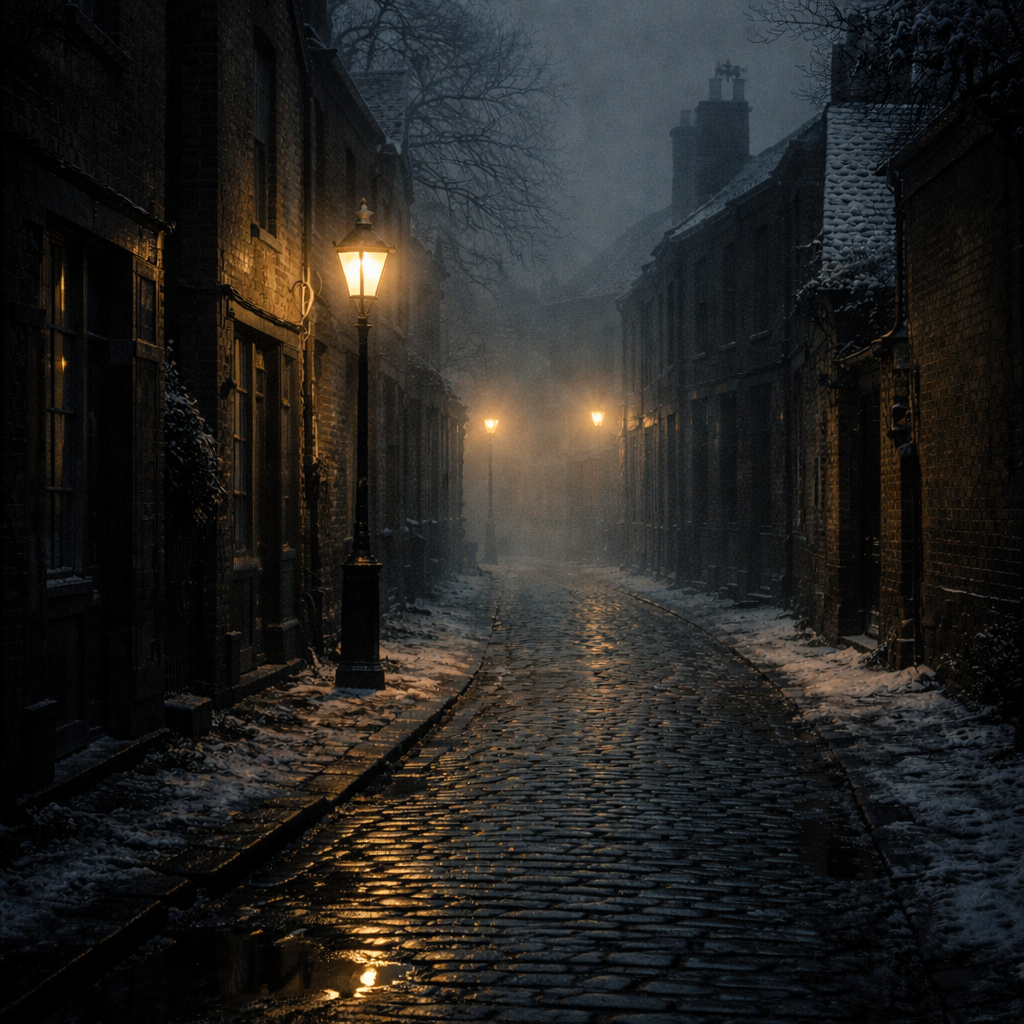
How superstition, panic, and mistaken belief led to one of England’s strangest murder trials
On a freezing January night in 1804, a man walking home from work was shot dead in a London lane.
His name was Thomas Millwood. He was twenty-nine years old. A bricklayer by trade. He wore white trousers and a white shirt, the standard clothing for his work. That detail would cost him his life.
The man who shot him believed he was firing at a ghost.
The village of Hammersmith, then a small community on the edge of London, had been gripped by fear for weeks. In late 1803, residents began reporting sightings of a pale figure roaming near St. Paul’s churchyard. The spirit was said to be the ghost of a suicide, buried in unhallowed ground and condemned to wander.
Descriptions varied, but certain details repeated. A tall figure in white. A face as pale as death. Some claimed it floated rather than walked. Others said it grabbed them with hands “cold as ice.” One woman reportedly collapsed from fright after encountering it near a gravestone.
Whether the sightings were exaggerations, pranks, or honest misperceptions almost didn’t matter. The stories accumulated. Fear hardened. Patrols formed. Men armed themselves with clubs, swords, and pistols. No one wanted to be the next person cornered by whatever was haunting the village.
Francis Smith was one of those men.
He was a young excise officer, not known as violent or reckless. But by early January, protecting the village meant confronting the ghost. On the night of January 3, 1804, Smith loaded his shotgun and walked along Black Lion Lane, where sightings had been frequent.
The night was cold and dim. Frost clung to the ground. Visibility was poor.
Ahead of him, he saw a pale shape moving through the darkness. White clothing caught what little light there was. To Smith, there was no doubt. The ghost had appeared.
He called out for the figure to stop and identify itself. There was no clear response.
Smith raised his gun and fired.
Thomas Millwood fell where he stood.
He had been warned before about walking home at night in his work clothes. His family knew about the ghost rumors. They urged him to cover his white garments with a darker coat after sundown. He didn’t think it necessary. He was coming home from work. He expected an ordinary night.
Instead, he became the center of one of the strangest murder trials in English history.
Smith was arrested immediately. The case went to the Old Bailey. By morning, London was not just talking about a ghost. It was talking about a killing committed in the name of stopping one.
The trial forced the court to confront a question that felt almost absurd and yet deadly serious: if a man truly believes he is defending himself or others from something supernatural, does that belief excuse killing?
Witnesses described weeks of terror in Hammersmith. Women fainting. Men claiming they were grabbed. Horses bolting in panic. The defense argued that Smith had acted under a genuine and overwhelming fear. He believed he was confronting a dangerous apparition. He believed he was protecting his neighbors.
The prosecution offered a colder position. A mistaken belief, no matter how sincere, does not justify taking a human life.
The jury convicted Francis Smith of willful murder. He was sentenced to death by hanging, followed by dissection of his body, the standard punishment for murder at the time.
But even as the sentence was read, discomfort spread. Executing Smith felt like punishing a man not only for his actions, but for the hysteria of an entire community. Within days, his sentence was commuted to one year of hard labor.
Millwood was buried. Smith served his time. Legally, the matter was settled.
It did not end there.
The Hammersmith case became a reference point in English law for nearly two centuries. Judges cited it when grappling with the role of mistaken belief in violent acts. Could perception, even if wrong, reduce culpability? Where does fear end and responsibility begin?
The principles surrounding such cases were revisited and clarified in 1983, long after both men were gone. Yet the Hammersmith Ghost still echoed in legal discussions. A winter night in 1804 had worked its way into the framework of modern law.
And outside the courtroom, the story took on a second life.
Reports of the ghost did not immediately disappear. Some claimed sightings increased after the shooting. In taverns and on street corners, the narrative shifted. Now people whispered that Thomas Millwood himself haunted Black Lion Lane, transformed into the very specter he had been mistaken for. Others insisted the original ghost remained, joined by the restless spirit of a man killed by fear.
Pamphlets and newspapers retold the story less as a legal case and more as a haunting. Over time, folklore absorbed the crime. The ghost became the headline. The dead bricklayer became a detail.
That transformation is part of what makes the case endure.
On the surface, it is a clear act of mistaken identity. A man in white clothing was shot by someone primed to see a threat. Underneath, it is a study in how belief spreads and hardens.
Francis Smith did not wake up intending to commit murder. He absorbed weeks of stories told by neighbors. Accounts of glowing eyes and icy hands. Warnings whispered after dark. By the time he walked down Black Lion Lane, the ghost already existed in his mind as something real and dangerous.
When he pulled the trigger, he was acting inside a shared narrative.
The ghost was never proven to exist. The fear did.
That fear organized patrols. Armed citizens. Pressured a man to carry a loaded gun. It changed the course of two lives and reshaped legal debate for generations.
We tend to think of hauntings as cold spots and footsteps in empty rooms. The Hammersmith case suggests something less theatrical and more unsettling. A haunting can also be an idea repeated often enough to alter behavior.
Rumor becomes expectation. Expectation becomes perception. Perception becomes action.
And action leaves evidence.
Black Lion Lane still exists, now folded into modern London. The village that once trembled at a pale figure in the dark has long since changed. But the story remains. Not because of confirmed apparitions, but because of what fear accomplished without one.
The Hammersmith Ghost did not need to be real in order to kill.
In that sense, it may have been real enough.
Leave a Reply