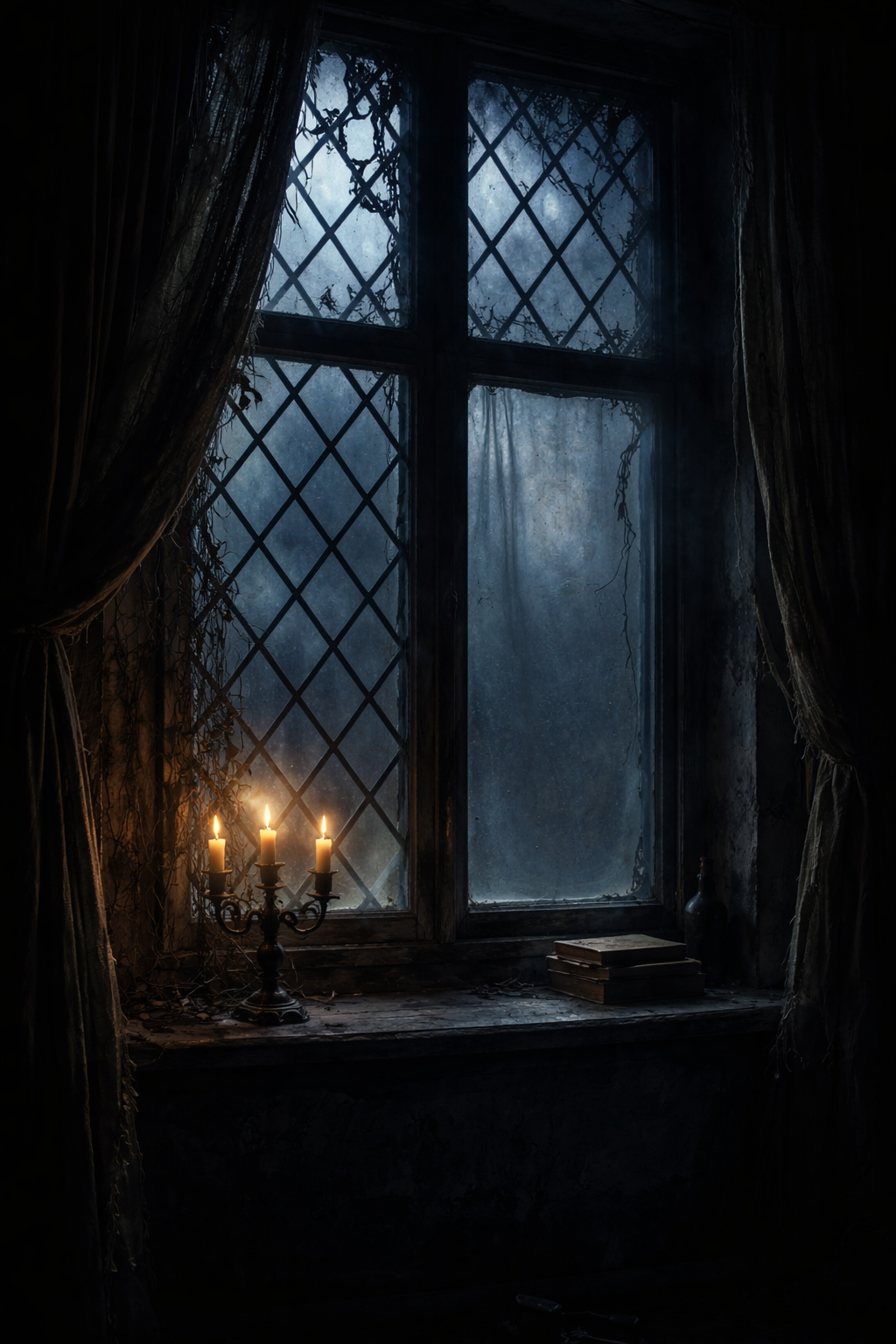
Why windows were once feared as openings without boundaries
First published on Meduim
Windows were never trusted.
They look harmless now. Fixed panes of glass meant to admit light and keep weather out. We treat them as passive features, architectural conveniences that simply exist to be looked through. But for most of human history, windows were regarded as one of the most dangerous parts of a home.
Not because someone could climb through them.
Because something could look in.
Before glass became common, a window was an opening, not a barrier. Cloth, shutters, lattice, or nothing at all separated the interior of a home from whatever waited outside. Sound passed through easily. Smell followed. And according to long-held belief, so did influence. Windows allowed contact without movement, and that made them fundamentally unstable.
Doors could be shut. Thresholds could be guarded. Windows could only be managed.
In many traditions, sight itself was treated as a form of reach. To see something was not neutral. Looking carried intent, whether conscious or not. Envy, illness, and malice were believed to travel through observation alone. A person did not need to enter a home to affect it. They only needed a line of sight.
This is why uncovered windows were feared after dark.
Light inside and darkness outside created an imbalance. Whoever stood beyond the glass could see clearly without being seen in return. That asymmetry mattered. It suggested vulnerability. Exposure. A home made visible to the wrong attention. Folk explanations for sudden sickness, especially in children, often pointed to windows left open at night. Someone had looked in. Something had noticed.
The language changes by region. The logic does not.
Windows were covered during illness not for comfort, but for containment. Airflow was secondary. Protection came first. The sick were shielded from outside sight because weakness was believed to draw interference. A body in transition was not meant to be observed.
The same logic applied to childbirth.
Birth was treated as an open state. A crossing. Windows were shuttered or veiled to prevent outside attention from reaching the mother or child. What entered through a gaze could follow the child for life. What noticed the moment of arrival might not leave.
Death carried the same risk in reverse.
When someone died, windows were often closed or obscured so the departing spirit would not linger near the opening. There was fear that the dead, newly unmoored, might be drawn back toward light or movement beyond the home. A window left uncovered during mourning was thought to confuse what was leaving and what remained.
Windows did not just admit light.
They created channels.
This is why protective objects were often placed in window frames rather than doorways. Charms, iron, written words, and symbolic markers were positioned where sight moved freely. A door could stop a body. A window required different defenses.
Even mirrors were sometimes turned away from windows so reflections would not align with openings. Reflection combined with exposure was considered especially risky. The concern was not theatrical. It was practical within its own belief system. Too many pathways overlapped in one place.
What’s unsettling is how much of this survives at the level of instinct.
People close blinds at night even when privacy is not an issue. A lit room with dark windows feels exposed in a way that is hard to articulate. We avoid standing directly in front of windows after dusk. We sense, without being taught, that being visible changes something.
We still manage windows during moments of transition.
During grief. During illness. During fear.
Windows allow presence without permission. They create access without entry. For centuries, that made them suspect. Not because they invited something in, but because they made the inside available to whatever was already watching.
A door must be opened.
A window only has to notice you.
And historically, that was enough to warrant caution.
Leave a Reply