Life Inside the Aylesbury Estate
Originally published on Medium.
The Aylesbury Estate was never quiet.
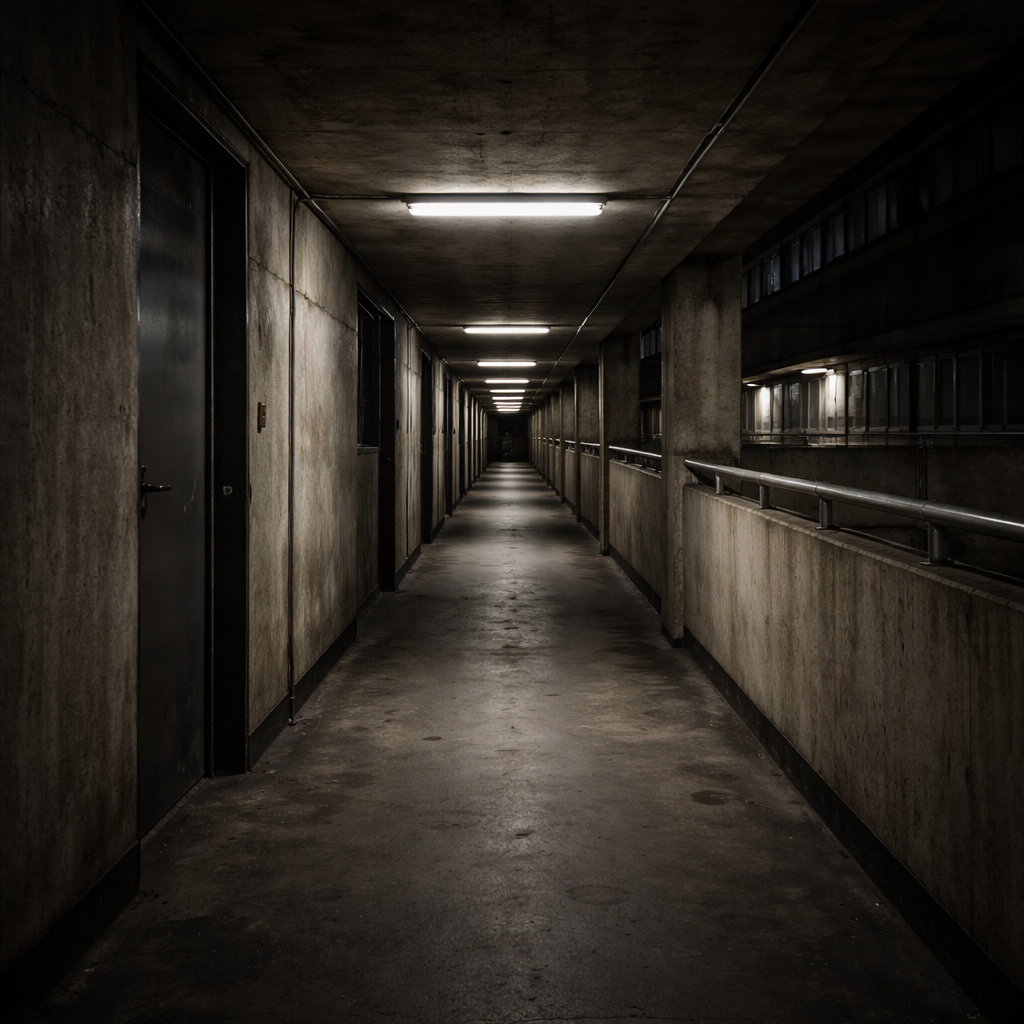
It was too big for that. Long concrete blocks stitched together by corridors that never seemed to end. Thousands of flats stacked on top of each other. You could walk for minutes inside the building without seeing daylight. People learned the shortcuts early. Which stairwells smelled less damp or of urine. Which lifts worked today and which would strand you halfway up. Which corners to avoid when it got dark.
By the mid-1990s, the estate had a reputation that traveled faster than anyone who lived there. Newspapers used it as shorthand. Politicians used it as a backdrop. Poverty. Crime. Failure. Words like that. For the people inside, it was simpler. It was where they slept. Where they raised kids. Where they waited.
Waiting was a big part of life there.
Waiting for lifts to be fixed.
Waiting for benefits to come through.
Waiting for letters from schools, from housing, from clinics that were already overwhelmed.
Jobs were scarce. Work came in pieces. A few shifts here. A short contract there. Nothing steady enough to quiet the constant calculation running in the back of people’s minds. How far the money would stretch. Which bill could be pushed another week. Whether the heating would stay on tonight.
Kids grew up fast in that kind of place. Not because they wanted to, but because there wasn’t much room not to. Older boys took up space easily. Younger ones learned to read the mood of a room quickly. Who was in charge. Who to stay close to. Who to avoid.
Most nights were ordinary. Televisions flickering behind curtains. Music bleeding through walls. Laughter sometimes. Arguments sometimes. Life going on in tight quarters. But the walls pressed in. Always.
In one of those flats, four boys ended up together one evening. Teenagers. The oldest seventeen. The youngest fifteen. None of them came from money. None of them came from homes where doors closed softly and stayed closed. They knew the rhythms of the estate. They knew how power shifted when someone older spoke louder.
The room they gathered in was small. A bedroom that had been turned into something else. Curtains drawn tight. Light kept low. Posters on the walls that weren’t about bands or football. Images cut from magazines. Violence. Faces staring back that didn’t belong to anyone they knew. It felt intentional, even if they didn’t have the words for it.
The younger boys hadn’t come for that. They expected a night like other nights. Music. Talking. Killing time. But once the door was closed, leaving wasn’t simple. Not when the ones in charge were already telling you where to sit.
They were told to place their fingers on the planchette.
It wasn’t presented as a choice.
The Ouija board wasn’t unusual on its own. You could buy one easily enough. A game, officially. But in that room, surrounded by candles and clipped images and the certainty in the older boy’s voice, it wasn’t a game. It was a thing you did because refusing felt worse.
The board spelled out a word.
KILL.
That word didn’t float in the air like a joke. It landed. Heavy. Final. The younger boys felt it immediately. Not as belief. Fear.
One of them would be dead before the night was over.
The knife came out quickly after that. Too quickly for anyone to talk themselves out of what was happening. Eleven times. That’s what the record says. Eleven wounds on a fifteen-year-old boy’s body in a room that was never meant to hold that kind of violence.
Afterward, the flat felt smaller. Hot. Airless. The candles were still burning. The board was still there. Nothing had changed except everything.
The boys who had power tried to keep it. They forced another set of hands onto the knife. Spread blame. Wrapped the body in sheets and tried to move it through the estate like they could carry the night away with them.
They didn’t get far.
One of the younger boys broke. He went to the police. Told them everything. The room. The board. The word. The knife. The pressure. Officers arrived while the body was still being dragged down the stairs.
The case would later be described in simple terms. A killing. A seance. Mental illness. Diminished responsibility. Sentences handed down. Names entered into records.
But that wasn’t how it began.
It began in a place where walls pressed in and choices narrowed. Where fear had room to grow because there wasn’t much room for anything else. Where power was uneven and silence was learned early. Where saying no felt dangerous and saying nothing felt safer.
The Ouija board didn’t create that environment. It didn’t need to. It only needed to sit in the middle of it.
When the trial ended, the estate stayed. The corridors didn’t disappear. The lifts still broke. The families still waited. One boy was gone. Others carried what they’d seen into adulthood.
Nothing about that night was supernatural.
It was human.
And it happened exactly where pressure had been building for years.
This case is part of a larger examination of how belief, pressure, and consequence intersect.
Leave a Reply